
Shaping Human-AI Interaction
As many teams race to build AI capabilities, the real challenge is learning how AI behaves in production: its latency, its unpredictability, its limits, and the expectations users bring from tools like ChatGPT or Gemini. Working on Nexis+ AI exposed me to these challenges firsthand and shaped how I approach human–AI interaction design.
Confidentiality Notice: The designs and visuals in this case study have been intentionally modified to comply with NDA requirements. My goal here is to demonstrate how I approach product design challenges, not to disclose proprietary details.
Lessons Learned
Why Transparency Matters When Accuracy Is On the Line
When accuracy affects professional credibility, concerns about bias, hallucinations, and reliability intensify—making transparency and source control indispensable.
AI UX Focus Areas
Latency Design
In our product, quick previews rely on straightforward calculations and document retrieval, but the full company profile is generated through agentic AI, synthesizing multiple insights. This means generation time can vary significantly, especially when users adjust the profile template to compare companies consistently (“apple to apple”). I explored patterns such as staged loading to maintain clarity and reduce friction during slower responses.
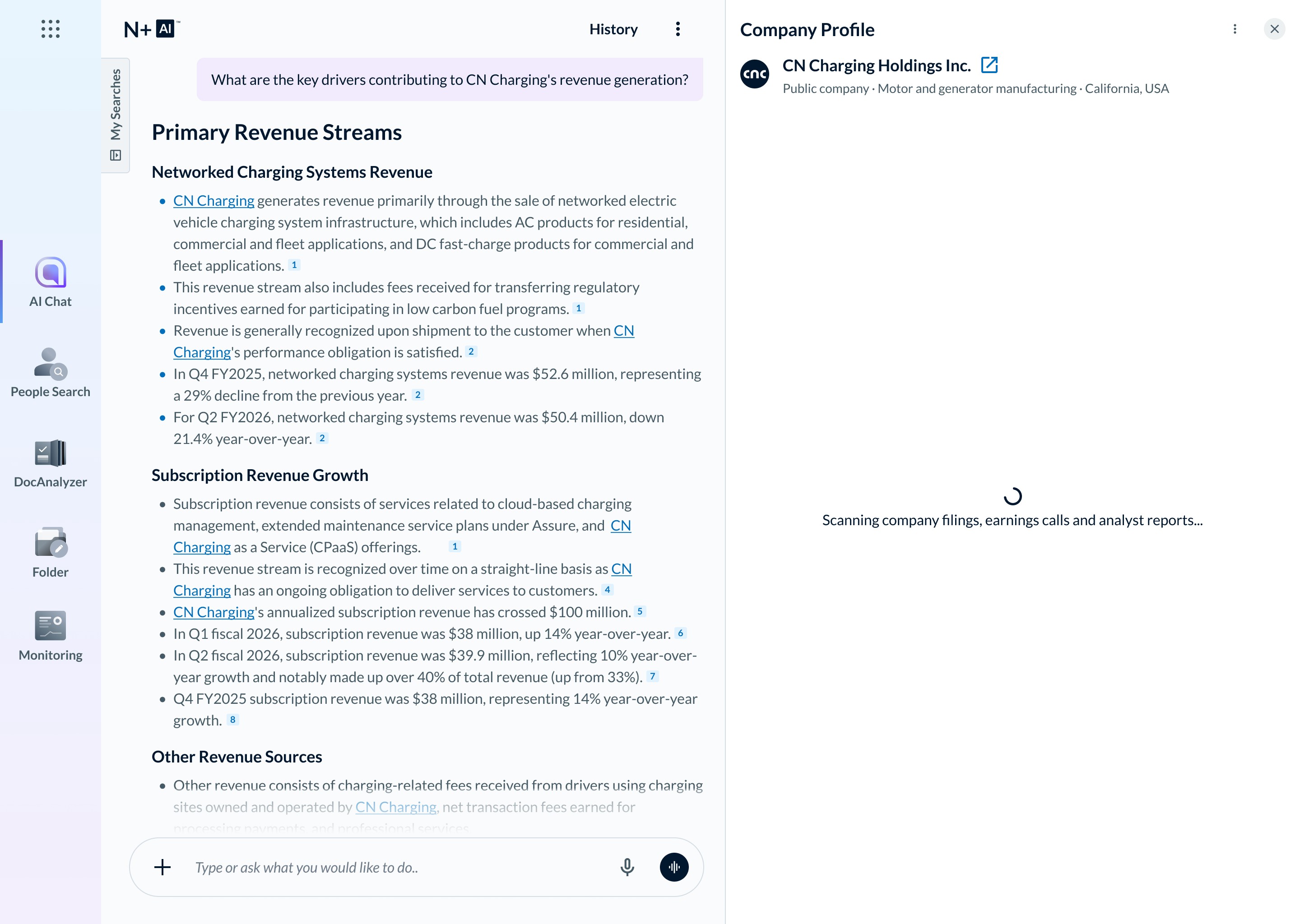
Company profile loading screen
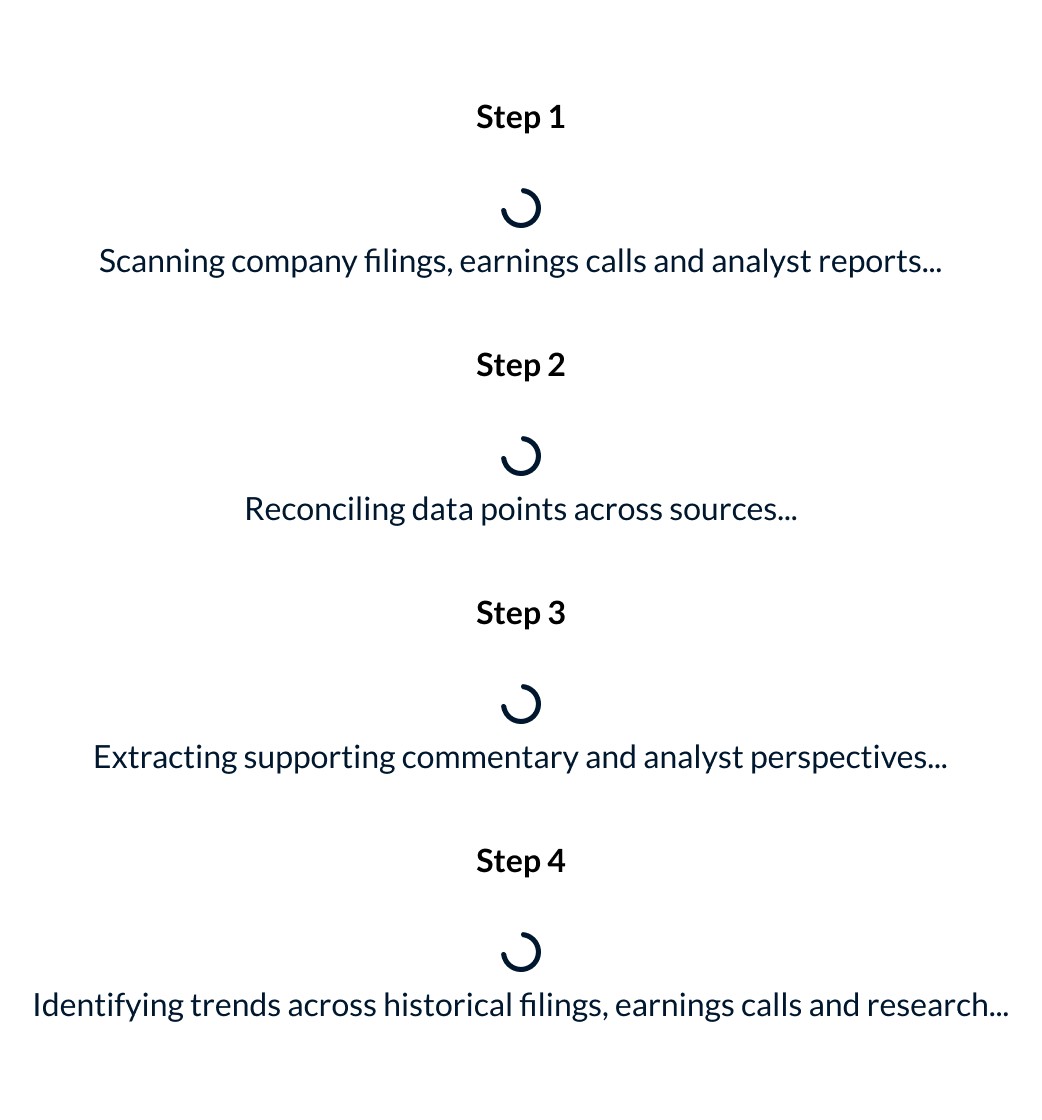
Loading message variants for steps
Progressive Disclosure
As conversational AI becomes the dominant interaction model, users expect to explore or expand information through natural language workflows. In Nexis+ AI, chat is positioned as a core capability supported by features like document analysis and saved-content summarization. I designed conversational entry points and structured follow-up pathways that allow users to dive deeper without overwhelming them—balancing simplicity with access to the richer context required for professional research.
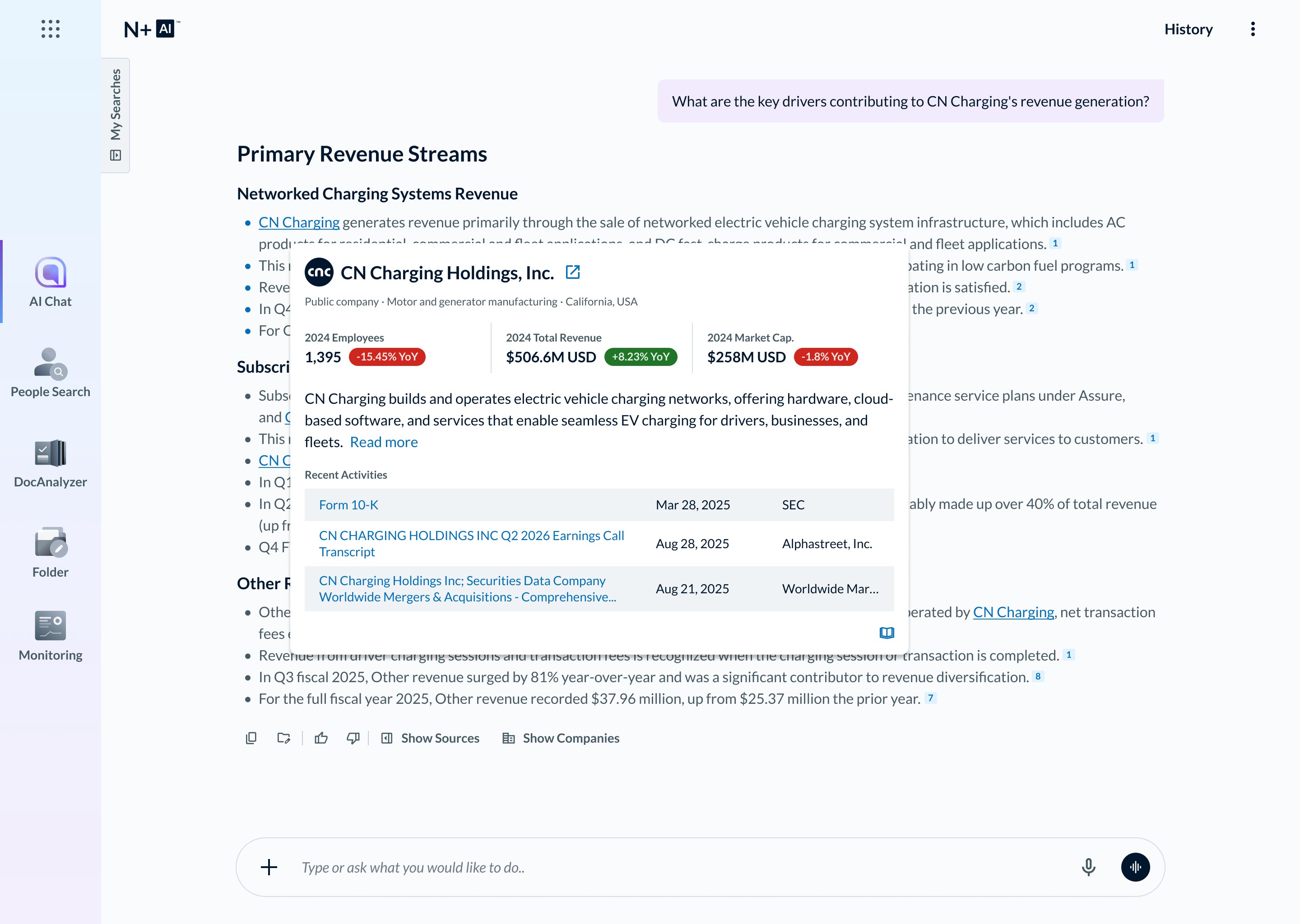
Company profile preview indicating key trends (hover effect)
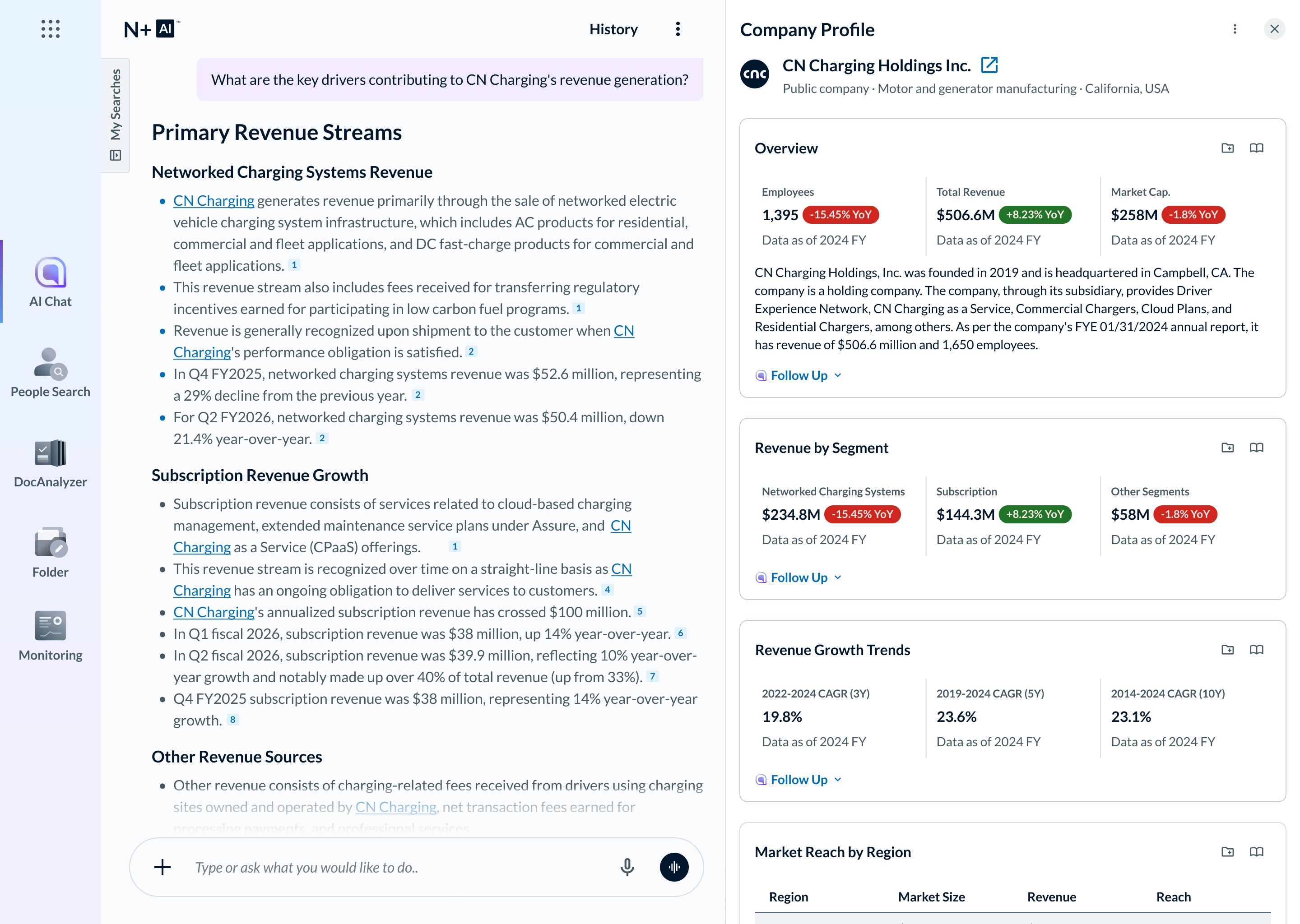
Company profile slide-out drawer showing more and deeper insights
Prompt Engineering
To keep the experience grounded in licensed, verifiable content, I proposed designing structured follow-up questions for each insight surfaced in the company profile. For instance, when users see a notable revenue change in a segment, they may want to explore which products drove that growth, what the GTM strategy was, or whether any regulatory shifts contributed. These follow-up paths help users uncover deeper understanding without needing expert prompting skills. They also narrow the scope of AI requests, which reduces token usage and operational costs—an important business consideration as AI services remain expensive to run while many are offered to users for free.
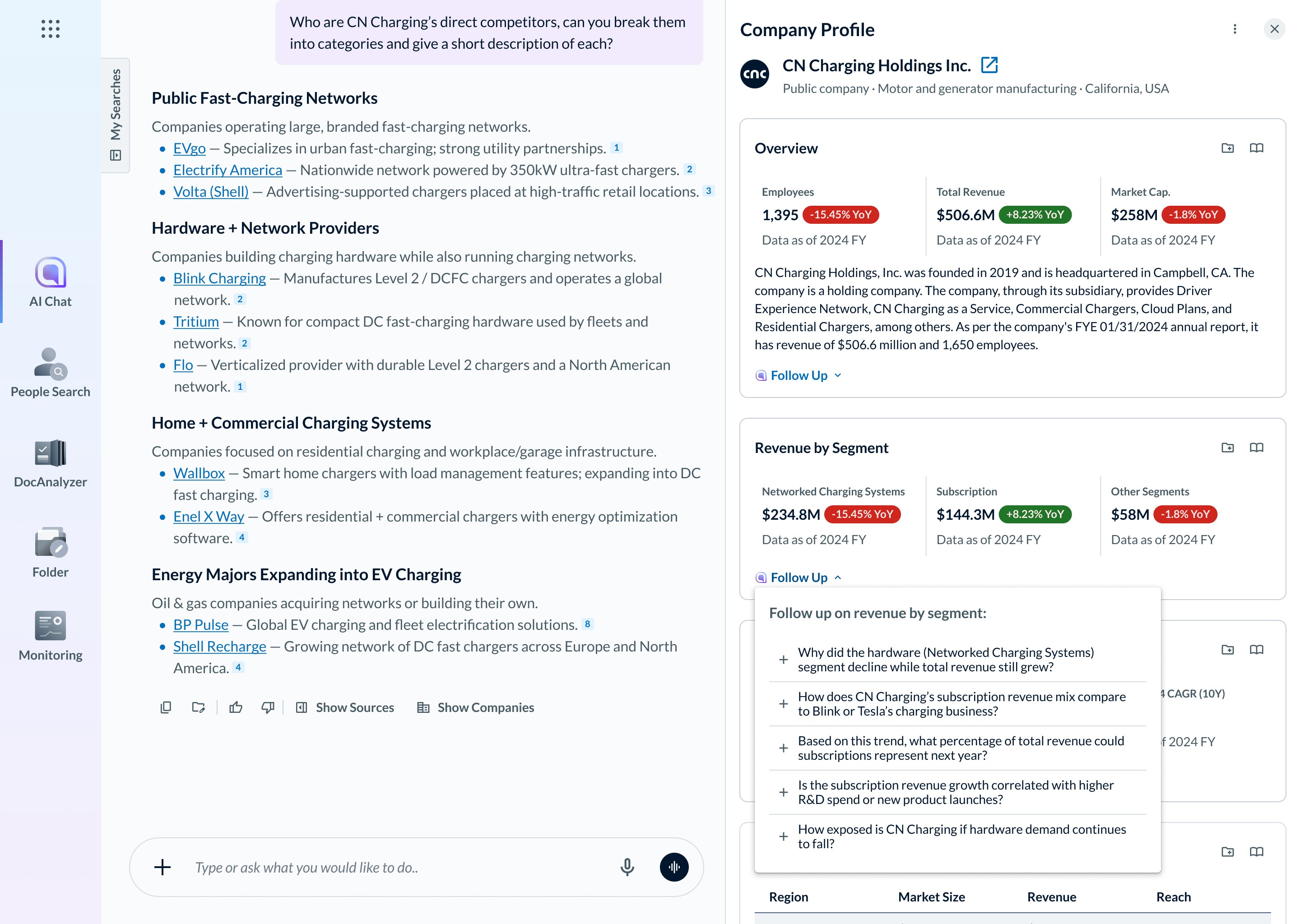
Suggested prompts helping users dive deep on data points and surfacing our licensed content
Content Trustworthiness
Research and testing made it clear that professionals worry about the credibility of AI-generated insights, especially when their own reputation depends on accuracy. To address this, I ensured that every company insight displayed its underlying sources and allowed users to manage which sources informed the analysis. By giving users control over inputs—such as filings, earnings calls, or analyst reports—we strengthened trust, transparency, and adoption while aligning the experience with workflows that rely heavily on authoritative, fact-based content.
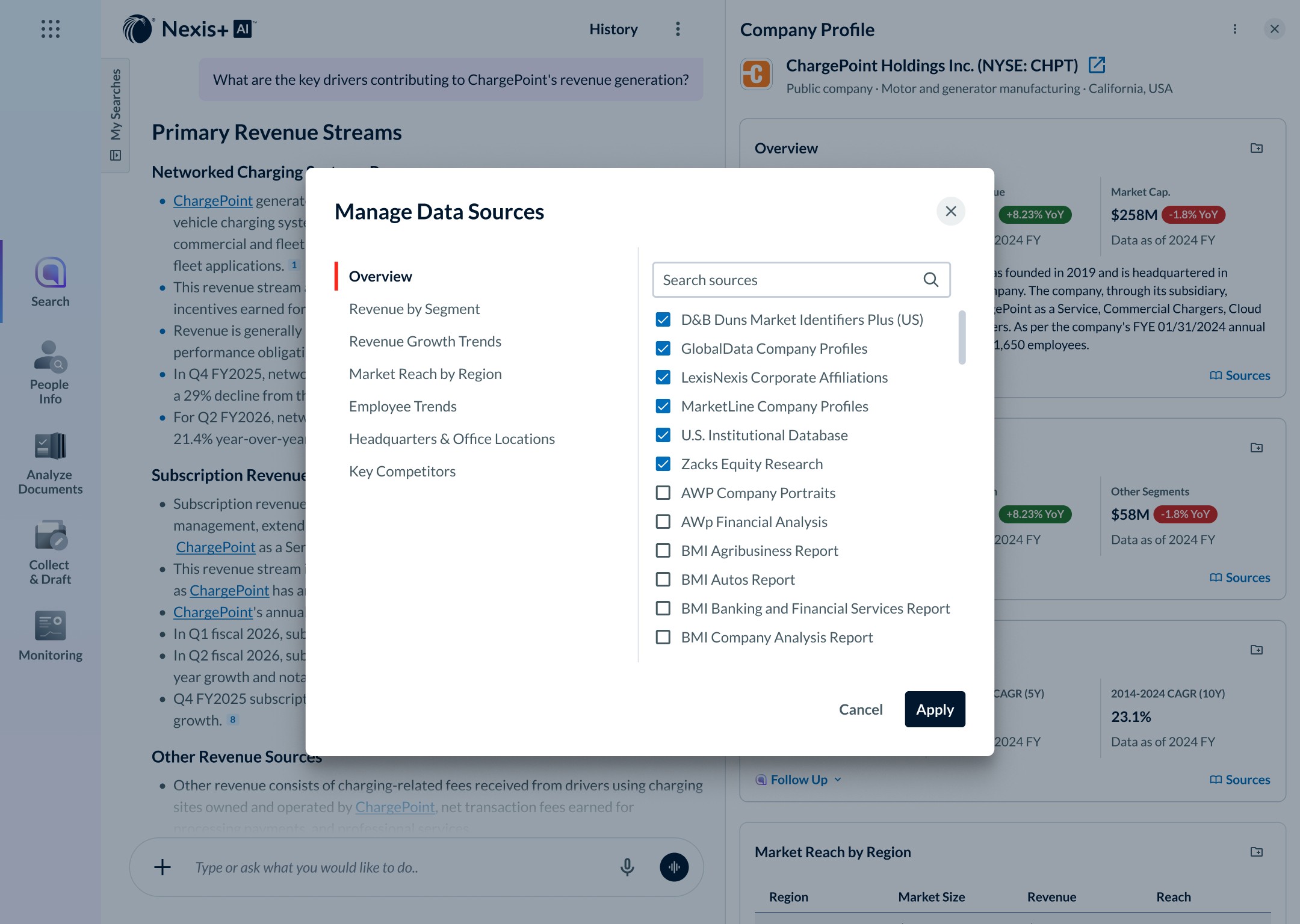
Company profile data source management modal
Conclusion
As many companies experiment with AI to find viable business models, Nexis+ AI is positioned in the introduction phase of the product lifecycle, where learning, validation, and iteration matter more than scale. As part of the founding team, I’ve worked on shaping AI experiences from the ground up, designing, testing, and refining solutions while the product searches for product market fit. This environment exposed me to the real constraints of AI products early on, including latency, trust, non-determinism, and user expectations shaped by mainstream AI tools.
The AI-UX patterns highlighted here such as latency handling, progressive disclosure, prompt guidance, and content trust, reflected how I approached these challenges as a designer, balancing user needs, business goals, and technical realities. While this is still an evolving journey, it has given me hands-on experience designing AI systems before they are “figured out.” Grounded in web and front-end fundamentals, I continue to strengthen my engineering fluency and expand my product design capabilities using tools like Figma Make and Cursor.
Another current exploration focuses on whether users want to conduct competitive research through branching workflows is allowing deep dives into multiple data paths while maintaining a coherent main narrative. Research has validated the problem space, and my next step is to translate these insights into solutions aligned with stakeholder priorities.