
Background Search Platform Product Design
Onramp Lab is a Taipei-based digital marketing and product studio that helps businesses scale in the US market through growth, web design, and brand systems. As the team expanded from financial/housing into a new vertical—background search. I supported branding and product design alignment, translating positioning into a conversion-focused web experience and scalable design direction.
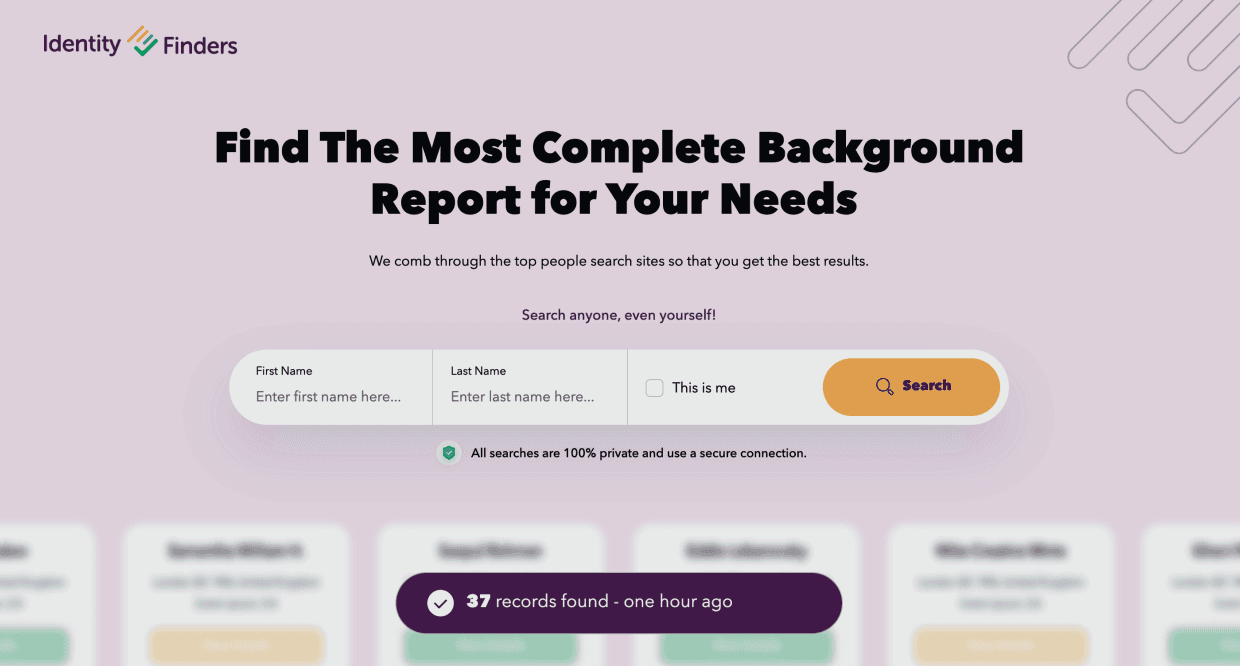
The key vision of the landing page design (Brand name: IdentityFinders)
Company
On-ramp Lab, Taipei
Project Kick-off
2021
Industry
Information technology
Product Type
Saas
Company Size
30+
Business Goal
This project supported an internal expansion into a new service line: a people background search offering. The goal was to create a credible, conversion-ready brand and web experience that could generate demand for the new service while also enabling cross-sell into adjacent offerings (e.g. insurance, credit consultation). My focus was to define the positioning, build a consistent visual foundation, and translate it into a lead-generation funnel that could be iterated quickly based on performance data.
Outcome
I delivered the brand and launch experience for a new background search service designed to open a new revenue stream and enable cross-sell into related offerings. Within two weeks, I produced a complete brand system (identity, logo, color palette, style guide) that allowed outsourced web production to move quickly without losing consistency.
With no PM role in place, I led cross-functional alignment between marketing (ads/SEO) and engineering to launch and iterate efficiently.
The initial funnel achieved a 5.2% conversion rate from landing-page visits to lead submission, providing a strong baseline for optimization and growth.
My Role
I was the sole product designer in the marketing team, owning end-to-end delivery from brief to launch in a fast-paced, data-driven environment. My work spanned web and funnel design, front-end implementation, online form flows, and branding/rebranding, supporting both projects with established brand systems and initiatives built from scratch.
I balanced usability with conversion goals using analytics, customer data, and A/B testing to guide iteration, and introduced lightweight design principles to improve consistency and speed across the team. With no dedicated PM, I also served as the bridge between marketing and engineering, clarifying scope, coordinating timelines, and keeping delivery moving through rapid, measurable cycles.
Build Knowledge &
Define the Brand
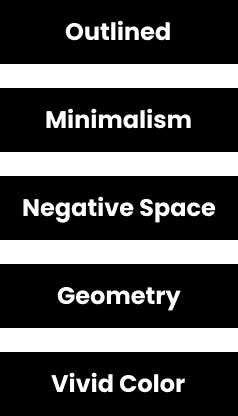
Branding can easily become subjective, so I structured the work to stay focused and defensible. I started by scanning current design trends to set a relevant visual direction, then clarified the product’s purpose by defining the “why” and “how” behind IdentityFinders to guide decisions. From there, I mapped visual themes and potential elements, explored multiple directions, and progressively narrowed options through critique and alignment, ensuring each final choice was intentional rather than purely aesthetic.
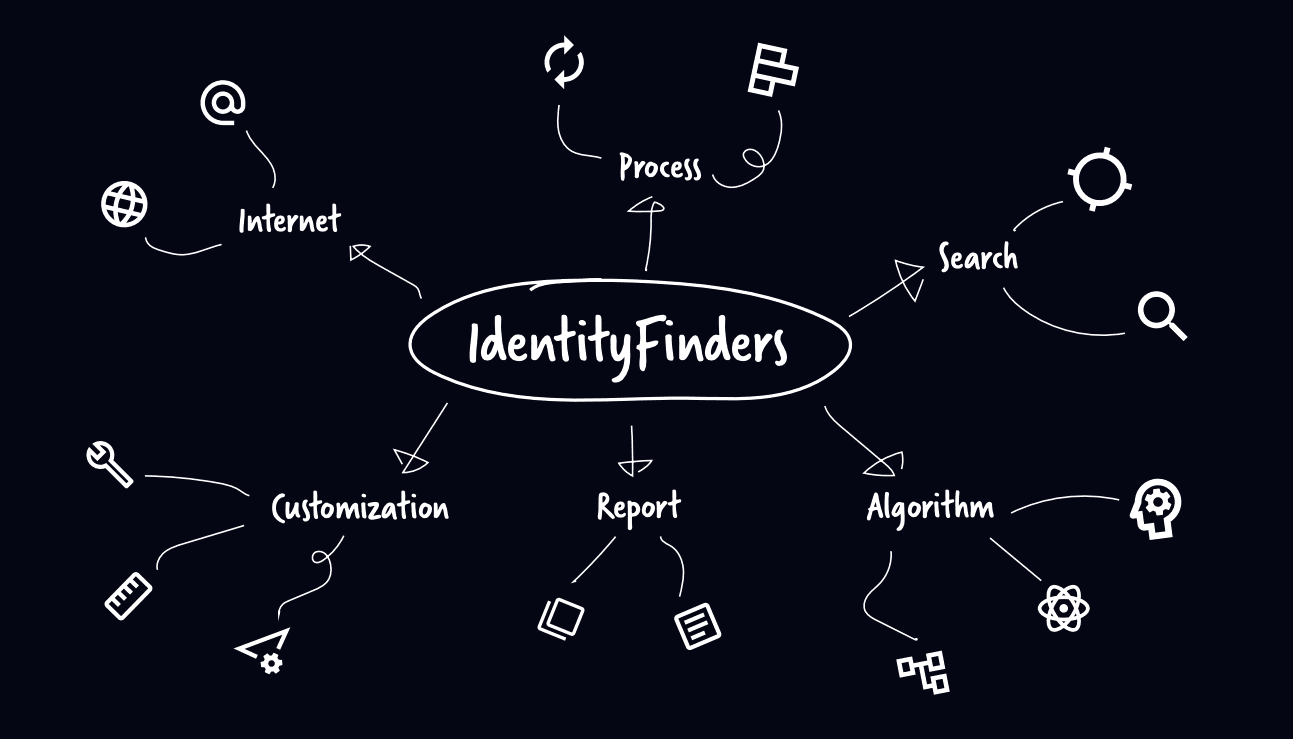
Mind-mapping the brand's key concept to guide design direction
Pre-design Mind Mapping
Early visual ideation mind map for IdentityFinders—mapping the brand to its core ideas (search, algorithm, reporting, process, customization, and internet signals) to generate consistent iconography and visual metaphors before narrowing into a final direction.
Longlist: Exploring Brand Directions
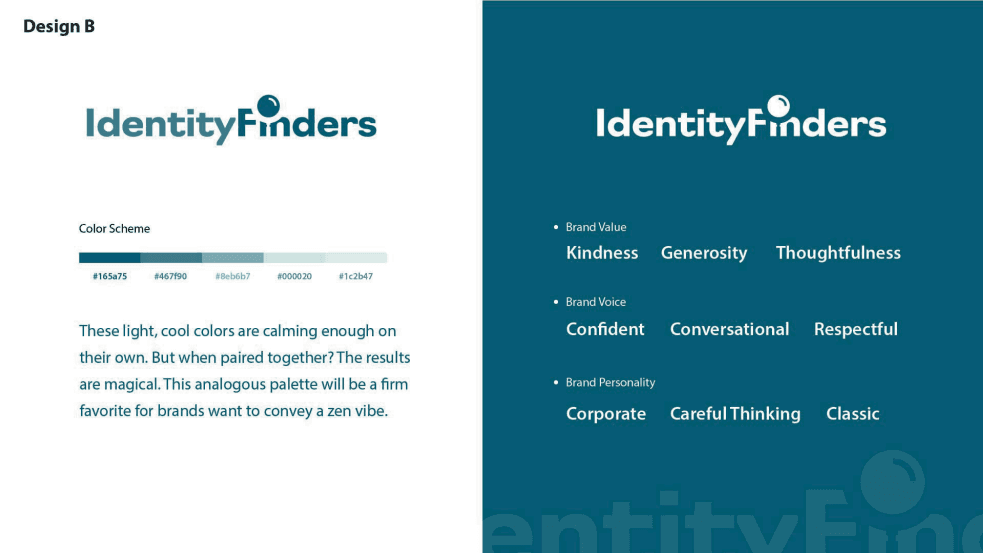
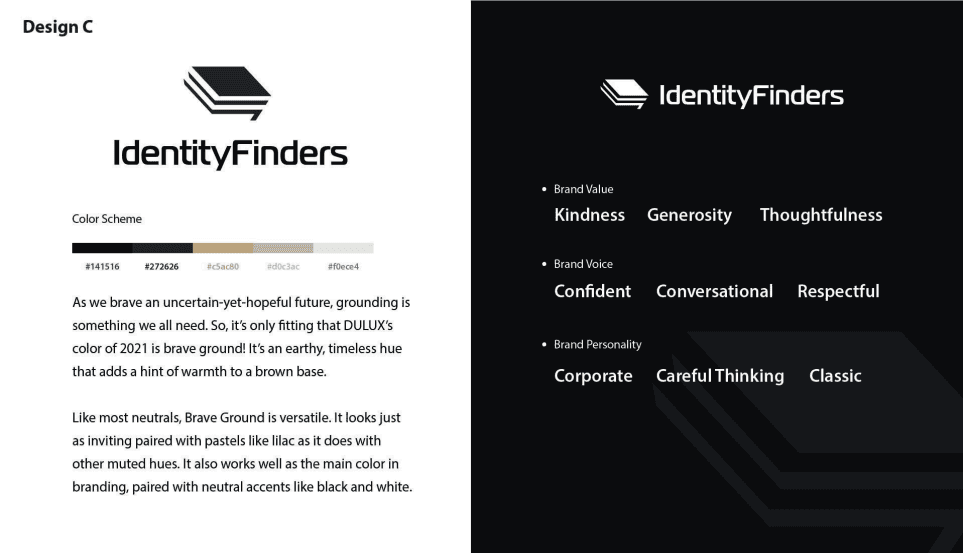
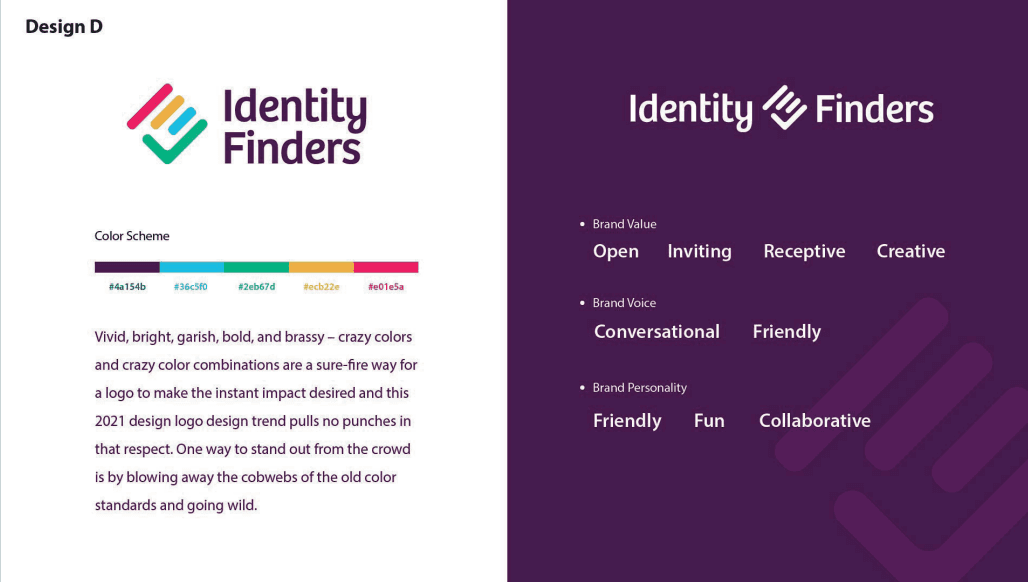
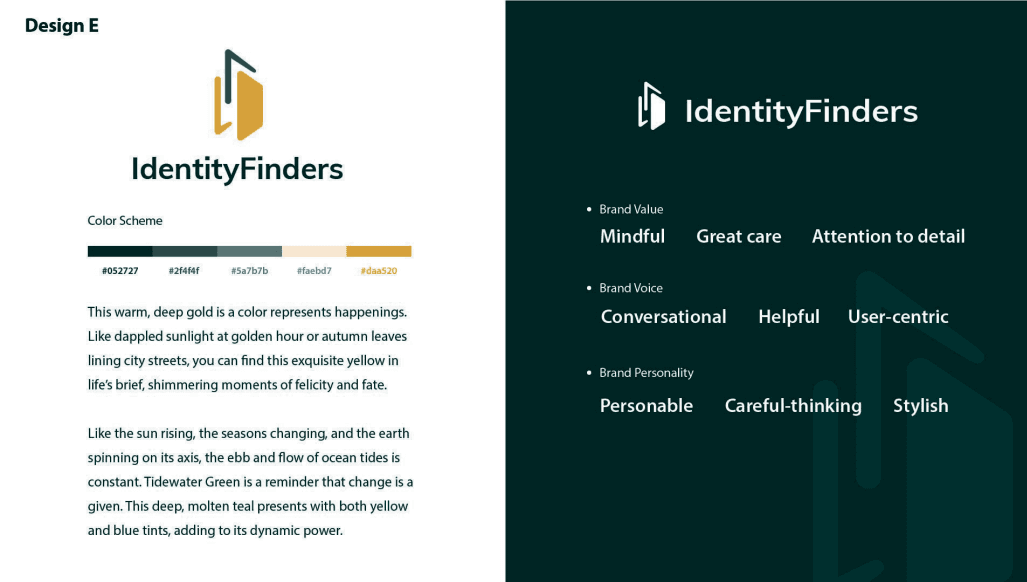
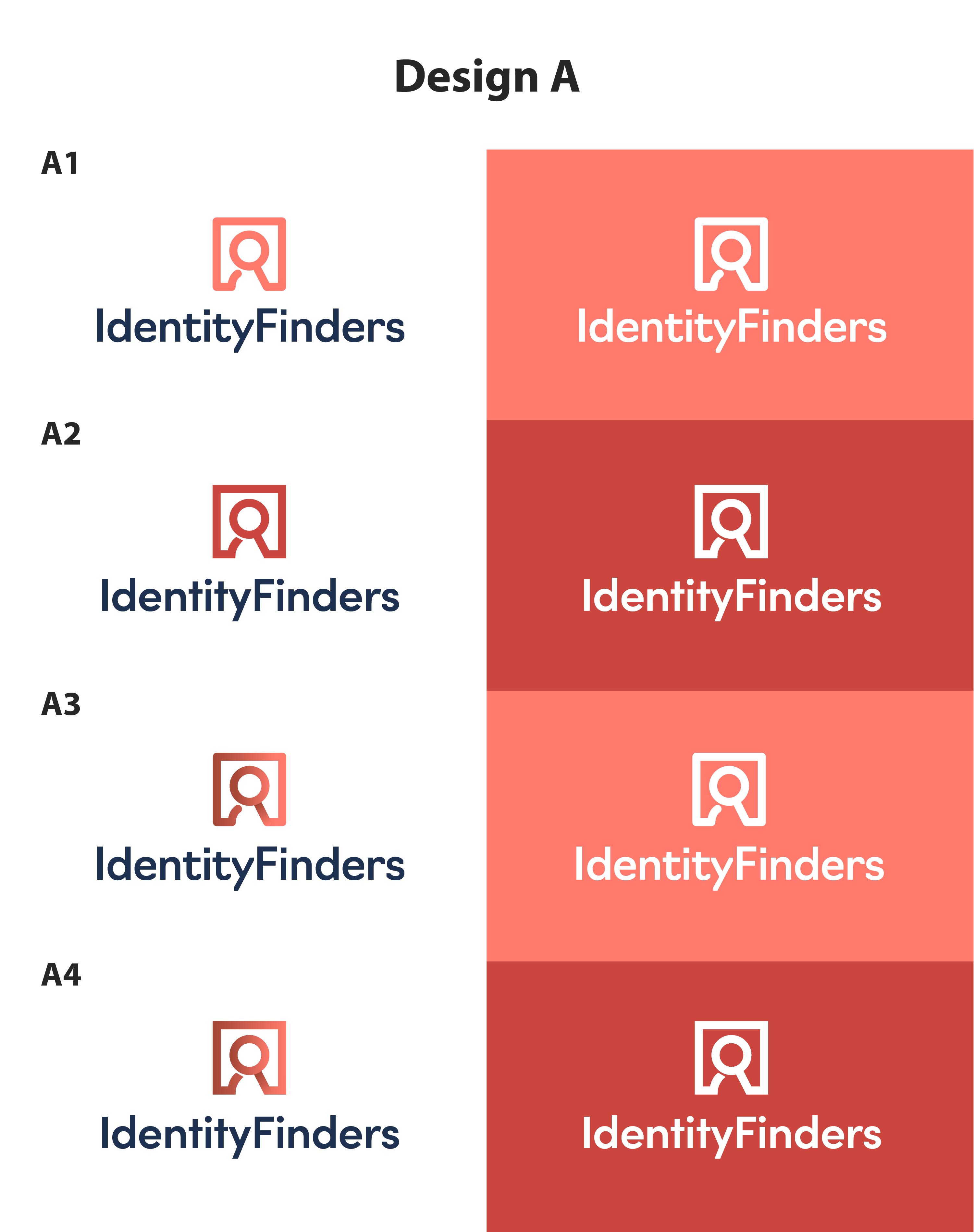
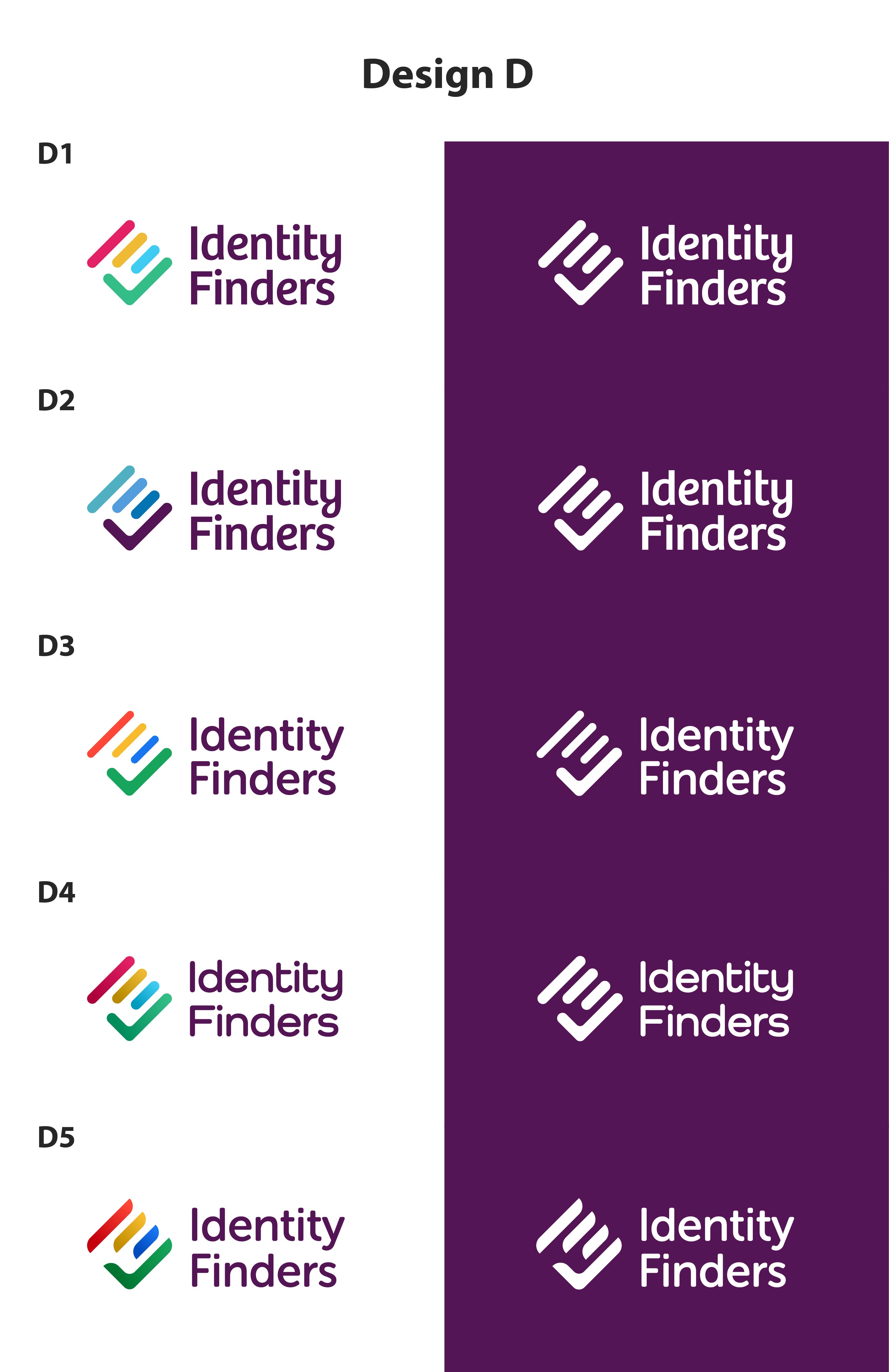
Throughout the exploration, I anchored every direction in the brand values and voice to avoid drifting into purely aesthetic choices. Each concept went through multiple variations, with repeated reviews of meaning, tone, and fit. From this longlist, I narrowed the work to five strongest directions to carry into the final round.
Shortlist: Converging Toward a Decision
At each stage, I presented work-in-progress concepts to internal stakeholders to build alignment and maintain momentum. I followed a deliberate divergent–convergent approach: first expanding the solution space to explore possibilities, then narrowing options to support clear, confident decision-making. In practice, reducing the set to a small number of well-justified directions helped stakeholders compare trade-offs, stay focused, and move forward without decision fatigue.
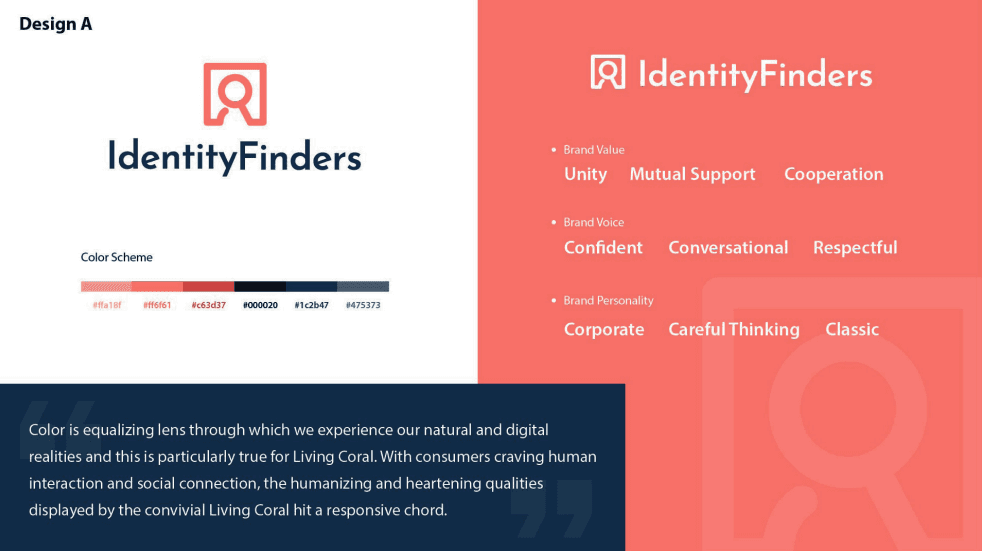
IdentityFinders's Style Guide
Enabling Launch at Speed
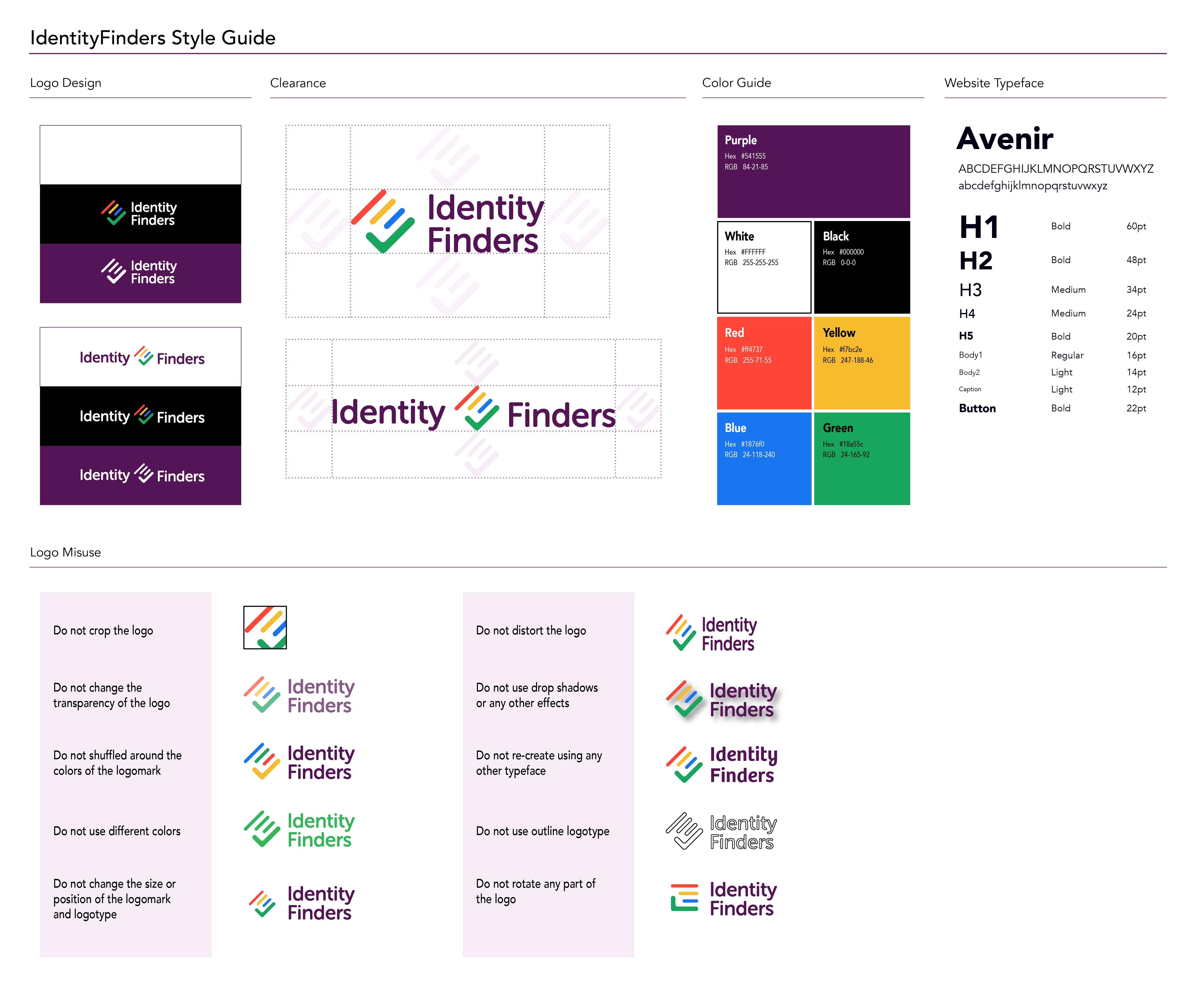
After stakeholders selected the final direction, I packaged the brand into a practical style guide to enable consistent execution. In our fast-paced, performance-driven environment, web production for this project was outsourced so I documented key principles such as layout, structure, hierarchy, and visual standards, and aligned closely with the external designer for a clean handoff. I then shifted back to form UX and iteration work to support launch and ongoing conversion performance.